What the public records and data show, with the sources listed at the end. How we label stories Found and written by our AI desk, then read and checked by the editor before it went up. How we label stories
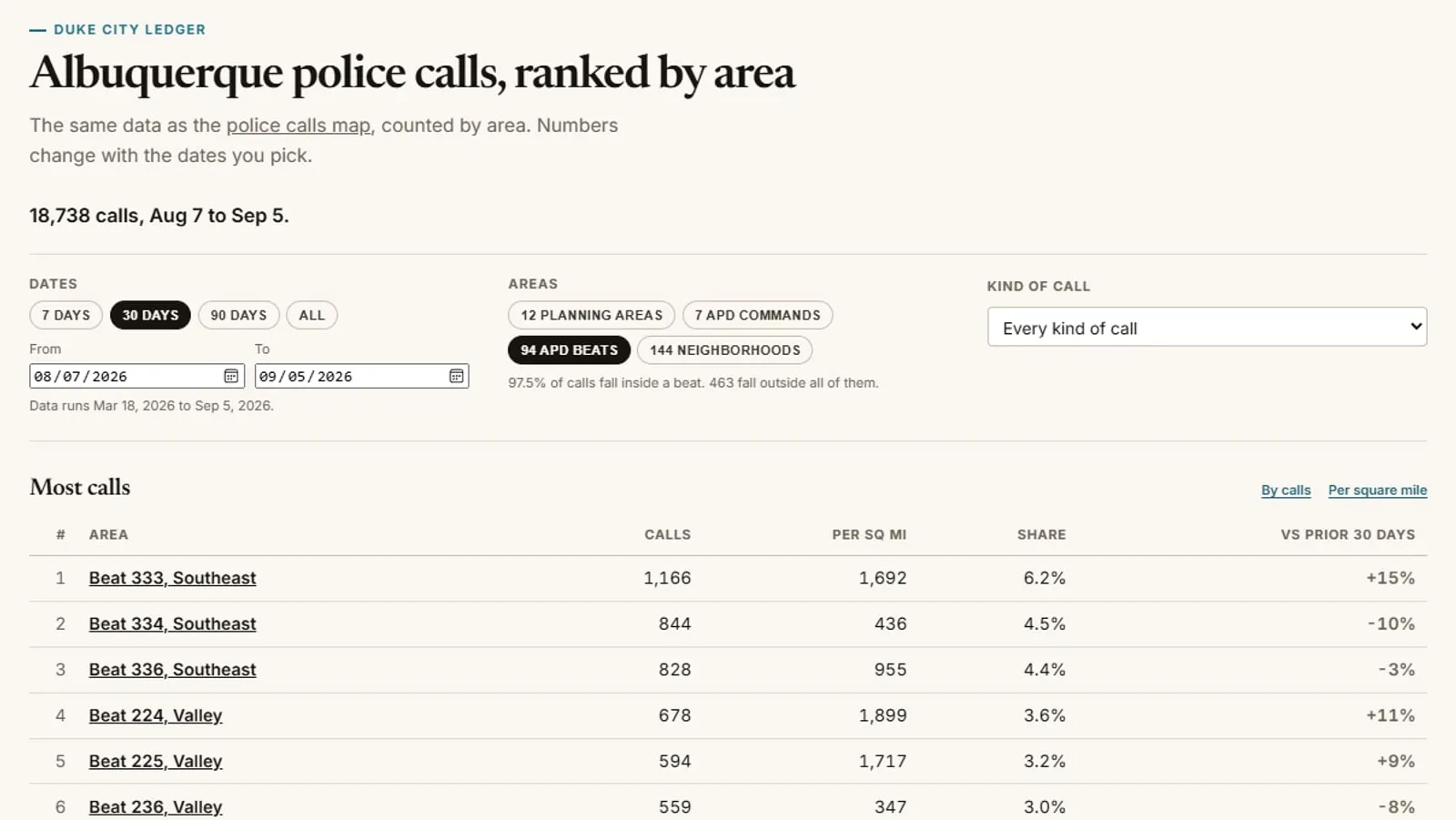
The police call rankings, counted by APD beat. Photo: Duke City Ledger
· Own work
The short version
APD divides the city into 94 beats inside its seven area commands. The Ledger draws them from the beat layer the city publishes.
Tap 94 APD beats on the police call rankings to see the beats with the most and fewest calls, by count or per square mile, for the dates and kind of call you pick.
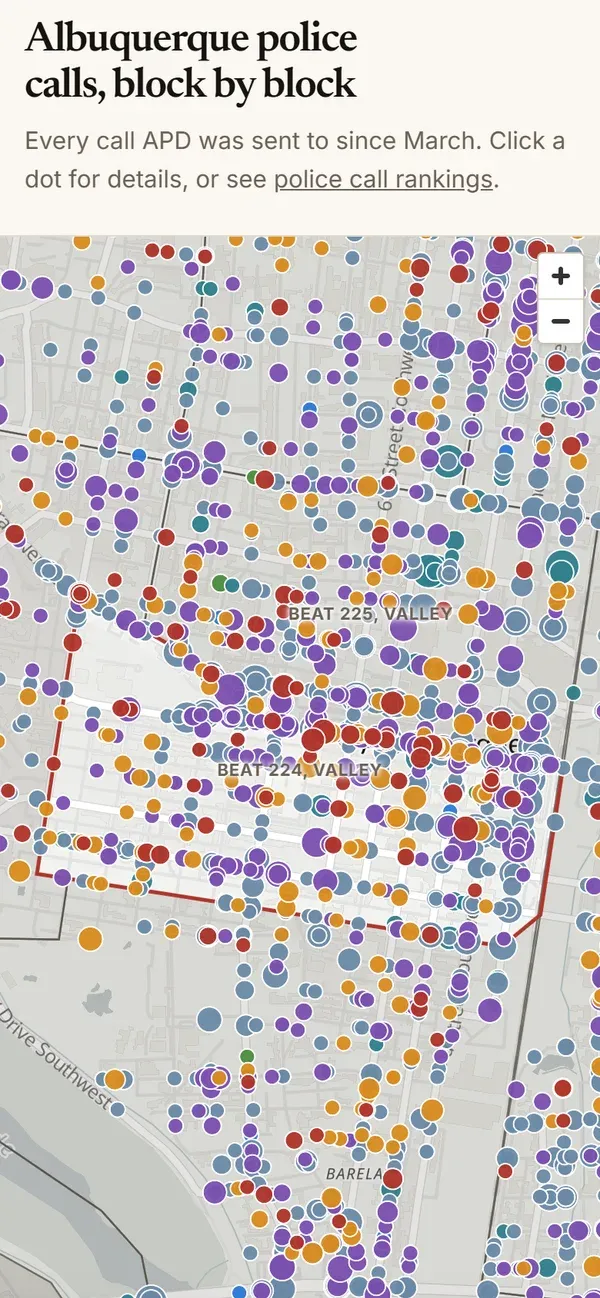
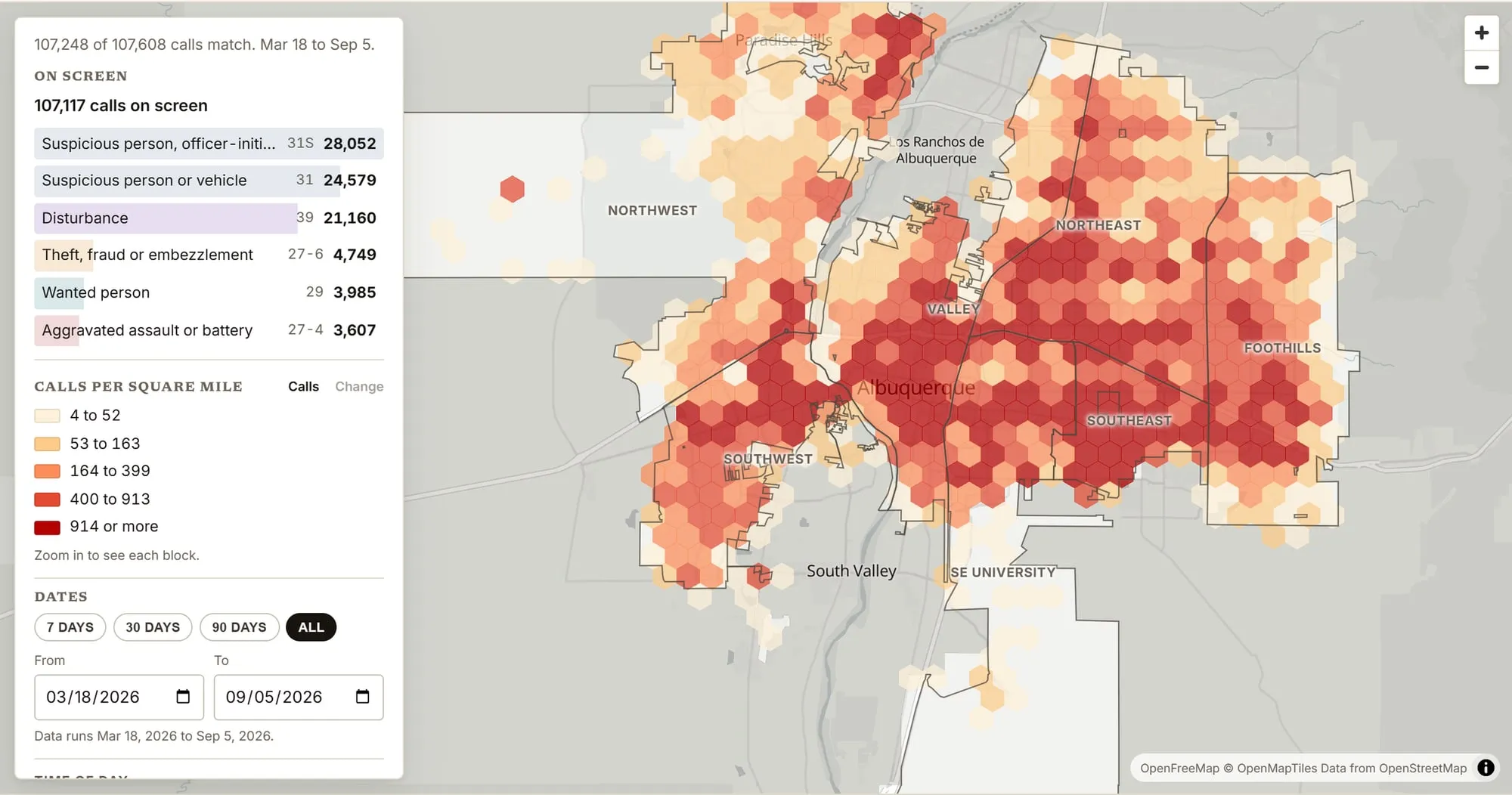
Click a beat's name and the police calls map opens with that beat outlined among its neighbors. The map's Show list draws every beat's outline.
Tap 94 APD beats under Areas. Most calls lists the 15 beats with the most calls, and Fewest calls lists the 15 with the fewest.
Each beat is named by its number and its area command, such as Beat 134, Southwest.
Per square mile ranks the beats by calls for each square mile they cover. Small beats sit low on a plain count, so check both.
The dates and Kind of call change every count. The last column compares each beat with the days just before, and its heading says how many.
The line under the chips counts the calls that fall outside every beat. The beat lines leave small gaps, and a call placed in one is counted in no beat.
Switching the rankings to APD beats, then to calls per square mile.Photo: Duke City Ledger · Own work
2. Pick one beat to chart its calls
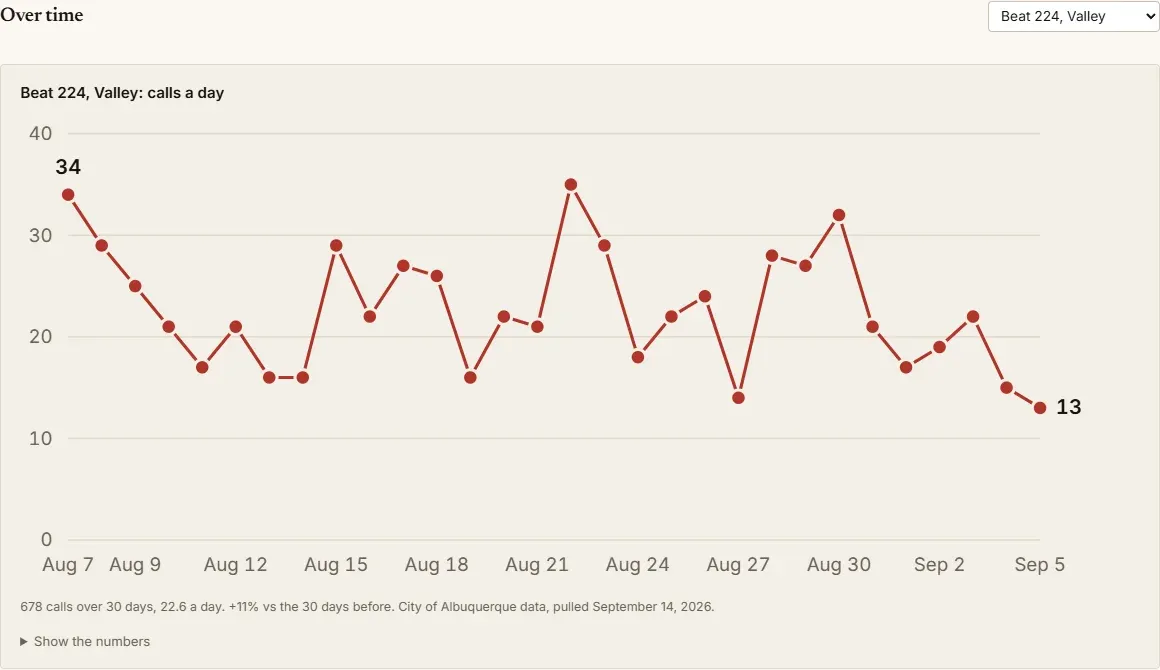
Over time has a picker that lists every beat. Pick one and the chart shows its calls a day for the dates you chose.
What they call about then lists the most common kinds of call in that beat.
One beat's calls a day.Photo: Duke City Ledger · Own work
3. Click a beat’s name to see it on the map
Every beat name in the tables is a link. It opens the police calls map zoomed to that beat, outlined, with the rest of the map shaded.
The beats around it are outlined too, with their names.
The map keeps the dates and the kind of call you picked.
The panel reads “Outlined:” and the beat’s name. Clear takes the outline off.
Copy the address to share the view. The link names the beat, so it still finds it after the site is rebuilt.
Open Show near the bottom of the map’s panel and pick 94 APD beats under Outlines. The map draws one set of outlines at a time, and starts on APD commands.
Area names labels the beats that fit the view. Zoom in and the names follow the beats you are looking at. Untick it to hide them.
What happened. A call is a report to police and does not say what officers found. The pages count calls, not crimes or arrests.
The exact spot. The city’s record places each call at a block, not an address, and the call counts in the beat that block’s point falls inside.
Who patrols a beat or how fast they arrive. The city’s call record carries no officer, unit or response time.
Whether APD has redrawn a beat. The city’s beat layer carries no date, so the pages apply today’s lines to every call, including the older ones.
Know what’s behind the calls in your beat? Send a tip.
Follow this story
Hear when there's a new story on it.
Email me
Email goes through Resend and is used only for what you pick. Notifications show the headline on your screen. We don't ask for your name and can't see who follows by notification. Privacy
Duke City Ledger. (2026, September 18). APD splits Albuquerque into 94 beats. The Ledger now ranks them by police calls and draws each one on the map. Duke City Ledger. https://dukecityledger.com/news/police-beats-map/
MLA
“APD splits Albuquerque into 94 beats. The Ledger now ranks them by police calls and draws each one on the map.” Duke City Ledger, 18 Sept. 2026, https://dukecityledger.com/news/police-beats-map/.
Chicago
Duke City Ledger. “APD splits Albuquerque into 94 beats. The Ledger now ranks them by police calls and draws each one on the map.” Duke City Ledger, September 18, 2026. https://dukecityledger.com/news/police-beats-map/.
Reader comments
What do you think?
Burqueños know this city best. Add what you've seen, ask a question, or push back on the story.
Loading comments…
New here? Sign up with your email. Confirm it and you're in, no password.
Comments are closed on this story.
Comments are the commenter's own words, not the Ledger's. Comment rules