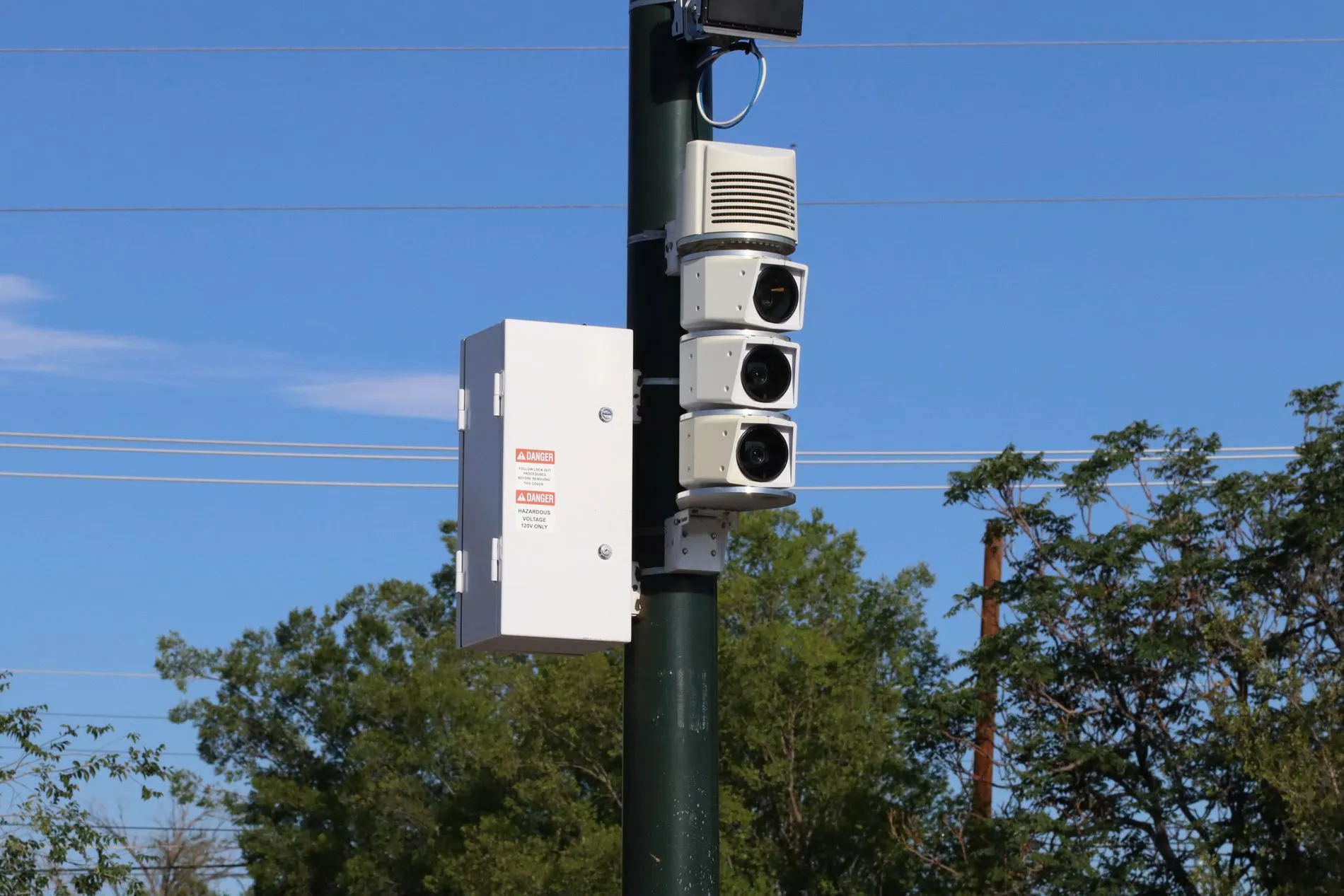
Three more automated speed cameras could go up on Albuquerque streets as soon as November, KOB 4 reported this month. The city is still surveying sites and hasn’t named them. The network already has 40 cameras, double the 20 running at the end of 2023.
“The goal is to encourage better driver behavior and for drivers to slow down where we have those cameras,” Transportation Planning Manager Valerie Hermanson told KOB 4.
Where the cameras go
The city places a camera where speeding and crashes overlap on its map of where people are killed and seriously hurt, weighed against how likely people are to be walking or biking nearby and whether a school, park or community center is close. Three of the newest sit on state roads, including Coors Boulevard and Paseo del Norte, under an agreement with the New Mexico Department of Transportation.
The 2021 ordinance that created the program cites 97 traffic deaths in 2019, the city’s worst year in more than a decade. Hermanson said the first 20 cameras cut average speeds by as much as 8.8 miles an hour, and that “even a one mile per hour reduction in average driver speed can have a 17% reduction in fatal crashes.”
Where the money goes
The cameras have collected more than $11 million in fees since 2022, the city told KOB 4. Hermanson said the money pays for “low-cost, high-impact safety countermeasures,” such as a recently finished bus-and-turn lane project on East Central near Juan Tabo. This fiscal year’s budget counts on $7 million in fines, nearly double the year before.
The $100 fine is set by state law, and the contractor that runs the cameras, Elovate, is paid a flat fee, not a cut of each ticket. State law also splits the revenue down the middle for a city Albuquerque’s size, with half going to the state’s general fund. The Administrative Office of the Courts estimated that Albuquerque takes in $4 million to $6 million a year that way, with about half of it going to the state.
State Sen. Heather Berghmans, who represents part of Albuquerque, wants the city to keep all of it. Her bill this year, with Sen. Antoinette Sedillo Lopez, never got a hearing because the governor didn’t put it on the 30-day session’s agenda, she told KOB 4. “Since the state is just getting a 50% cut to go to our general fund, which now has billions and billions of dollars in it, it’s money that I really think municipalities can better utilize,” she said. She plans to try again next session. New Mexico’s Department of Justice noted a tradeoff: the bill would also have dropped the outside audit that checks whether a city spends the money on traffic safety, as the law requires.
What it means for a driver
A camera fires only when radar clocks a car 10 miles an hour or more over the limit, and Albuquerque Police Department staff review the evidence before a notice is mailed to the vehicle’s registered owner. The citation carries no license points and doesn’t touch the owner’s credit.
An owner who wasn’t driving can name the driver in a notarized affidavit. Anyone can work off the fine with four hours of community service, ask for a payment plan, or request a hearing and appeal to district court within 30 days. Leave three fines unpaid, and a 2023 ordinance lets the city boot the car when it’s parked on a city street.
The cameras aren’t the Flock cameras the Ledger has mapped separately. The city says they photograph only vehicles that are already speeding and don’t track where a car goes.


Reader comments
What do you think?
Burqueños know this city best. Add what you've seen, ask a question, or push back on the story.
Loading comments…
New here? Sign up with your email. Confirm it and you're in, no password.
Comments are closed on this story.
Comments are the commenter's own words, not the Ledger's. Comment rules