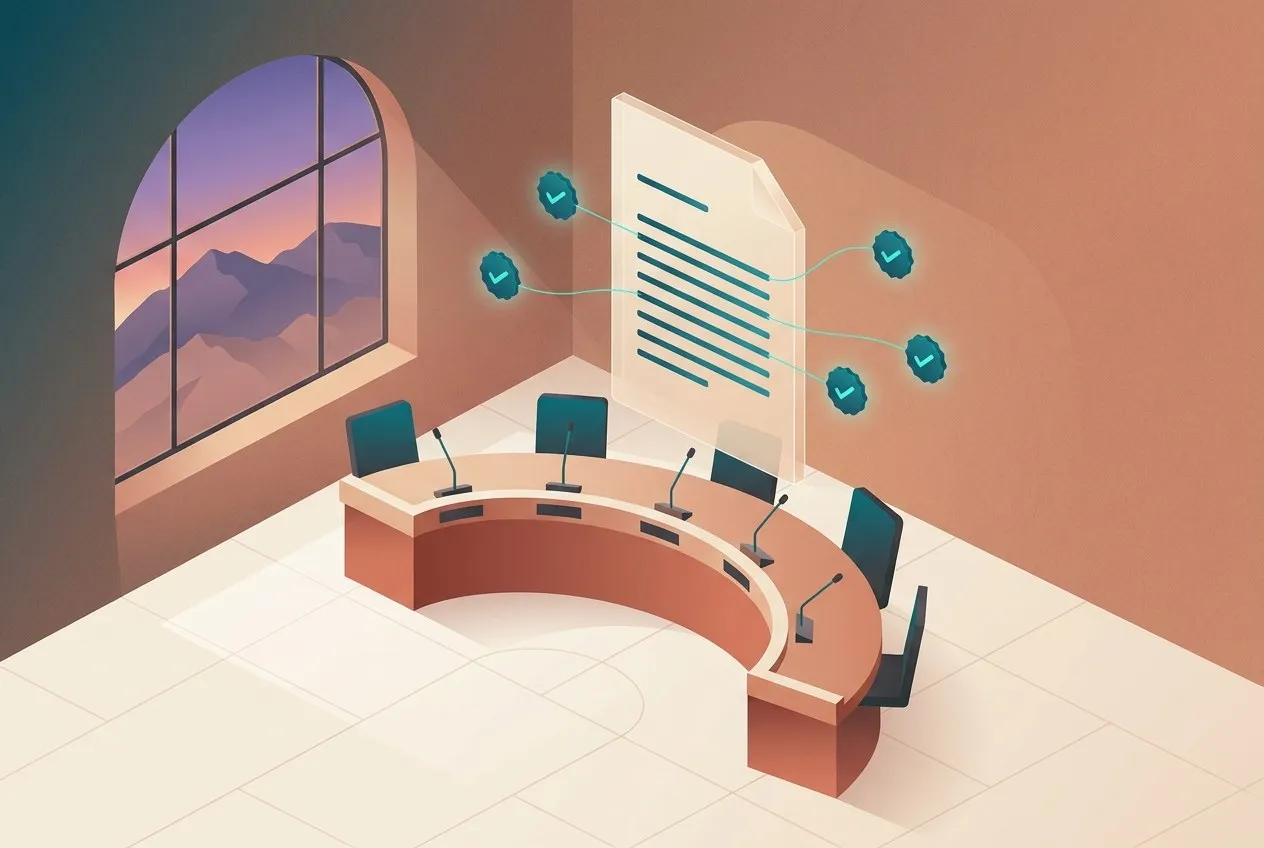
You no longer have to sit through a four-hour meeting to know what your local government decided. Our new meeting summaries cover the Albuquerque City Council and the Albuquerque Public Schools board. More cities are coming. Each one tells you what passed, what it costs and what it means for you.
AI writes these summaries. Here is how they’re made, how we check them and what to do when one is wrong.
Why we’re doing this
You have a right to know what your local government decides. But meetings run for hours, often on weeknights. The official minutes can take weeks to come out, and they’re hard to read. Most people never see either one.
Others are trying to fix this too. In Chicago and other cities, City Bureau’s Documenters pays residents to sit in on meetings and take notes. In New York, one developer runs citymeetings.nyc, which uses AI to summarize City Council meetings. Some cities, like Saratoga, Calif., now use AI to summarize their own meetings.
Here’s what’s different about ours:
- We’re not the government. Nobody we write about runs or pays for these summaries.
- Numbers, votes, dates and members’ names are checked before they go up. Each point must quote the official notes or video transcript word for word. If a number, vote, date or name doesn’t match, the summary doesn’t run.
- We show our work. The official notes or video are linked on every summary, and we publish how we test them.
- They’re free to share. Anyone may cite or republish our meeting summaries in full. Just credit the Duke City Ledger, link to the summary and keep the note that AI wrote it.
Where the words come from
Every summary starts with the meeting’s own record. That’s the approved minutes, or the clerk’s list of what passed, once they’re out. Before then, it’s a machine transcript of the meeting video plus the agenda.
The record is linked at the top of every summary. When a summary comes from video, each point links to the moment in the video where it happened.
Twice a day, our system looks for meetings that have a new record. It sends that record to an AI model with strict rules. The model can’t search the web or use anything but the record.
The model writes each summary the same way:
- A headline.
- The short version: what passed and what it costs.
- What people said. Residents who speak in public comment are never named.
- Every item the board voted on, with a “For you” line.
- What’s next.
- What the record doesn’t say. If the minutes leave out a date or a cost, the summary says so instead of guessing.
How we check them
The model has to back up every point with short quotes copied word for word from the record. Then plain software, not AI, checks the work.
- Every quote has to appear in the record exactly.
- Every dollar amount, vote count, date, number and member’s name in a point has to appear in that point’s own quotes.
- A vote count has to match the record’s tally or its roll call. A 5-4 vote can’t come out as unanimous.
If a summary fails, it goes back to the model once with a list of what was wrong. If the second try still fails, it’s held back. It never goes up.
How accurate are they?
Before launch, we tested the method. AI summarized six past meetings, three of the City Council and three of the APS board, from the video alone. Then software checked the vote on each agenda item against the official notes: the approved minutes or the clerk’s list of what passed. All 41 vote counts the notes recorded matched. Every member’s name matched too. Our checks also held back three of the six summaries before they could run. See the full results.
We don’t expect them to be perfect. AI can misread a meeting, and a transcript can mishear a word. But the way we build them limits the harm a mistake can do:
- Money, votes, dates and names have to match the official notes or video transcript, or the summary doesn’t run.
- Every summary links to its official notes or video. In a summary written from video, each point links to the exact moment it happened, so you can check it yourself.
- A summary written from video is rewritten once the approved minutes come out.
No one on our staff reads these summaries before they go up. Every one is labeled as written by AI. So when we get something wrong, we want to hear about it.
How to tell us if one is wrong
If a summary gets something wrong, send us a correction. You can use the form, Signal, email or a DM on Instagram.
It helps to tell us:
- Which meeting and which point.
- What it should say.
- Where you saw it: a page of the minutes, or a time in the video.
We check it against the record. If we got it wrong, we fix the summary and add a dated note saying what changed.


Reader comments
What do you think?
Burqueños know this city best. Add what you've seen, ask a question, or push back on the story.
Loading comments…
New here? Sign up with your email. Confirm it and you're in, no password.
Comments are closed on this story.
Comments are the commenter's own words, not the Ledger's. Comment rules