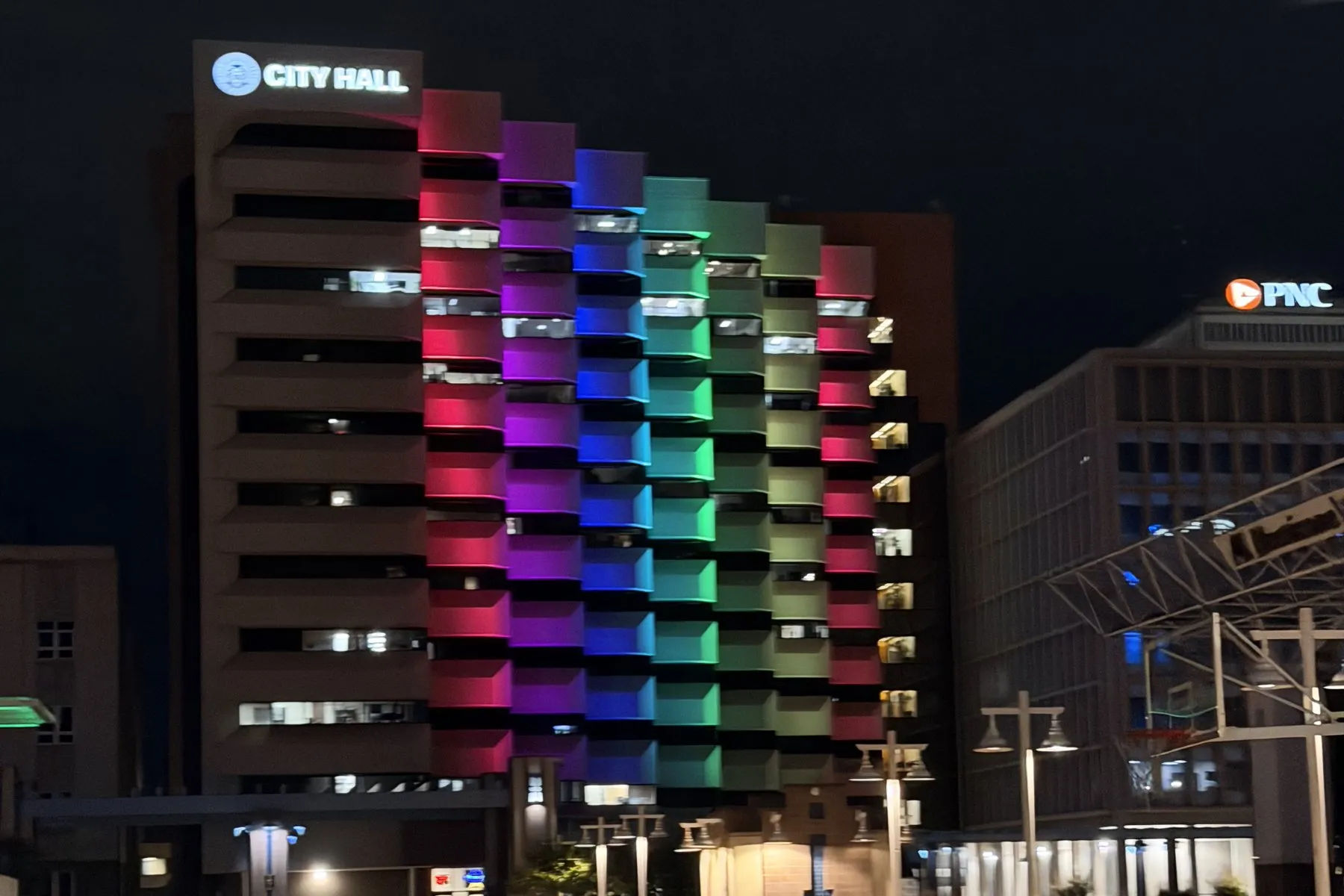
The Albuquerque City Council votes Monday night on four bills that would narrow who gets a say when a project is proposed near them, and what it costs to fight one.
The biggest, O-26-61, ends the city’s recognition of neighborhood coalitions, the umbrella groups that bring several neighborhood associations together. Recognition is what entitles a group to notice of development applications and standing to appeal them. The bill says the city’s eight recognized coalitions cover 96 percent of the city.
All four bills are sponsored by Councilor Dan Lewis, who represents District 5. They are on the agenda for final action at the 5 p.m. meeting.
Coalitions would lose their seat, and associations would get new rules
Coalitions could still organize and speak at hearings, the bill says. They would lose the notice the city now sends them about development applications, major city projects and blasting permits, along with the standing to appeal that recognition brings.
Neighborhood associations keep their recognition but take on new duties. Before an association takes an official position on a development application or files an appeal, it would have to put the question to its whole membership, advertised two weeks ahead. The position passes only with a majority of the members who vote. The association must then give the city a record of how every member voted, and note each member who did not.
The bill also ends a rule that let associations recognized by October 2017 keep boundaries that break today’s limits on size and overlap. Existing associations would have until Jan. 1, 2027 to meet all of the bill’s new rules or lose recognition.
An appeal of an approval would cost $1,000
A second bill, O-26-60, writes appeal fees into the zoning code and splits them by outcome. Appealing a project the city approved would cost $1,000, nearly four times today’s top fee. Appealing a denial would cost $300. Neither could be refunded.
The bill’s reasoning is that an appeal of an approval “inherently require[s] the City to revisit decisions” already found to fit city policy, and that the delays “may postpone the implementation of projects.”
Two requests to the Legislature
The other two bills are memorials, which ask for something and carry no force of law. State law lets anyone “aggrieved” by a zoning decision appeal it, a standard M-26-1 calls “extraordinarily lax.” It asks lawmakers to let cities define who counts. M-26-2 asks that cities be allowed to send some appeals straight to district court instead of to the council first.
The city has already narrowed who can appeal once. Since January 2025, under a bill Lewis sponsored with Councilor Joaquín Baca, a neighborhood association appealing a nearby project needs a petition signed by owners or tenants of most of the lots within 660 feet of it.
What each side says
The bill makes Lewis’s case. Coalitions, it says, “are not necessarily structured around direct resident membership and participation and may contribute to uncertainty regarding representation, standing, notice, and participation rights of residents.” It ties the changes to the city’s housing shortage: “predictable development procedures are necessary to support housing production.”
Opponents say the bills target groups that go to court. A District 7 homeowner wrote in a guest column on PeteDinelli.com, a political blog, that the package “is retaliation to a history of litigation by Community Coalitions and Neighborhood Associations.” Coalitions exist, the column says, “to help serve communities that are incapable of fighting back.”
Coalitions do sue, and sometimes win. In September 2025 the state Court of Appeals sided in part with the Westside Coalition of Neighborhood Associations over two city approvals for a development and ordered a new hearing.
None of the four bills went through a council committee. When they were introduced on Sept. 21, they were sent straight to Monday’s meeting.
How to weigh in
Anyone who wants to speak must sign up by 4 p.m. Monday on the council’s comment form or by calling 505-768-3100. The council hears no more than 30 speakers, for up to two minutes each. The meeting is also on Zoom.

Reader comments
What do you think?
Burqueños know this city best. Add what you've seen, ask a question, or push back on the story.
Loading comments…
New here? Sign up with your email. Confirm it and you're in, no password.
Comments are closed on this story.
Comments are the commenter's own words, not the Ledger's. Comment rules